Hiroki Nakamura
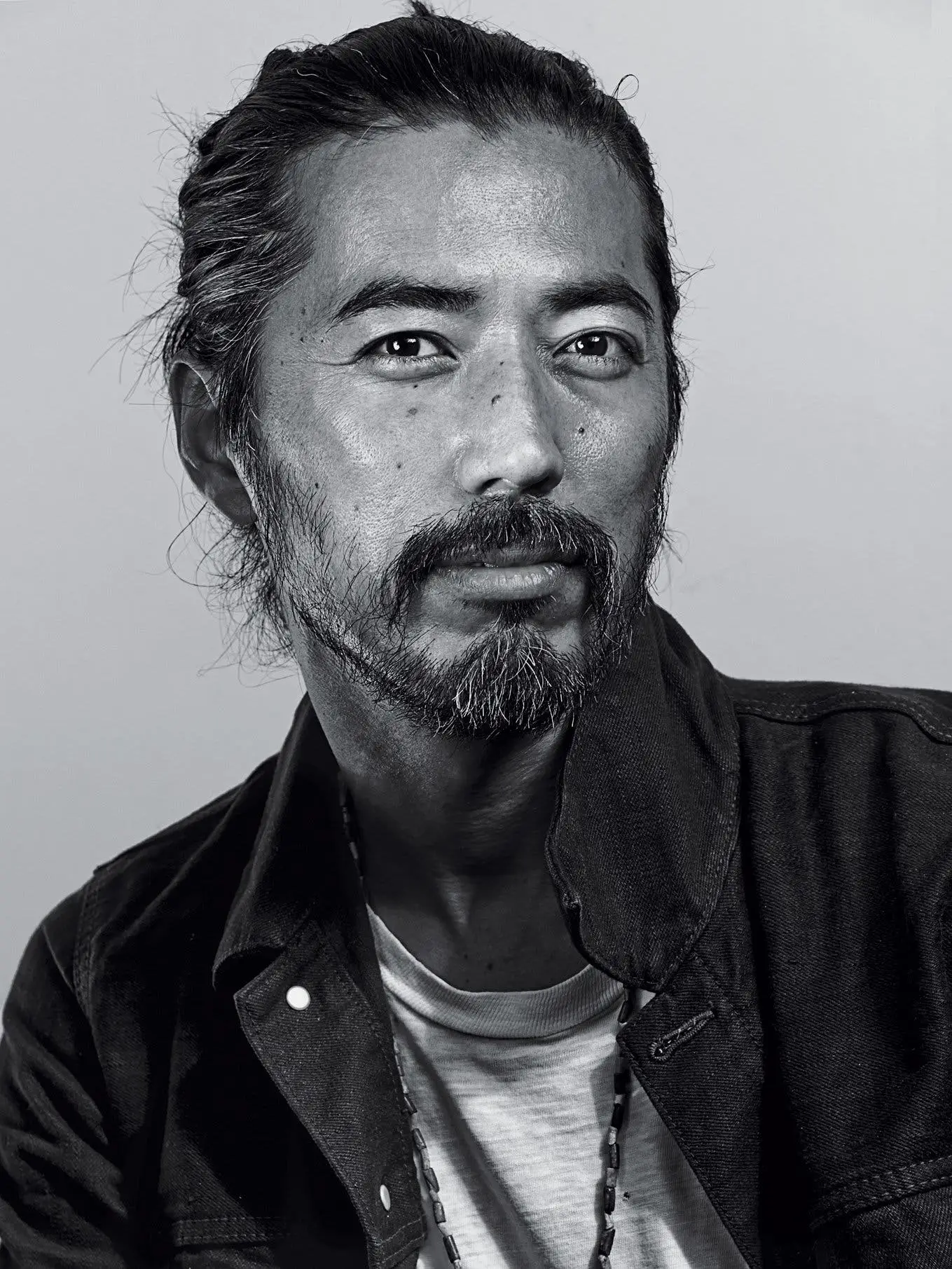
Hiroki Nakamura was born in Kofu, Japan, and grew up in Tokyo with a fixation on well-made objects that began before he had any vocabulary for it. At fourteen, in the mid-1980s, he developed an obsession with hard-wearing footwear — not with how shoes looked but with how they were constructed, what materials they used, and why some survived decades of wear while others fell apart in months. At fifteen, his parents sent him to Alaska, an experience that introduced him to the functional clothing and gear of extreme environments. He did not study fashion. He spent eight years working as a designer for Burton Snowboards, a role that deepened his understanding of technical construction and material performance but left him dissatisfied with the disposability of the products he was helping create. He wanted to make things that lasted. In 2001, he quit Burton and founded Visvim.
The early output was footwear. The FBT moccasin, which debuted around 2002, established the template: a shoe that combined a traditional Native American moccasin construction with a modern Vibram sole and premium materials, producing an object that looked simultaneously ancient and contemporary. Nakamura had traveled to Native American communities to study their traditional moccasin-making techniques, and the FBT reflected that research — not as appropriation but as a genuine attempt to understand why a particular construction had endured for centuries and how its principles could be applied to contemporary footwear. The Christo sandal, introduced in 2003 and inspired by the wrapping techniques of Bulgarian artist Christo Javacheff, became another signature: a sandal that covered the foot rather than exposing it, with straps that crisscrossed the upper in a construction that defied the category’s conventions.
What made Visvim unlike any other brand in its category was Nakamura’s method. He travels constantly — to Amami Oshima for doro-zome mud dyeing, to rural Japan for sashiko stitching and boro patchwork, to indigenous communities across North America and beyond — seeking out artisans who practice textile techniques that are disappearing. The process is not tourism. He studies the techniques, understands their material logic, and then integrates them into Visvim’s production. The Indigo Camping Trailer line, launched as a sub-brand, pushed this approach further: garments constructed using pure Japanese indigo dyeing (honai-zome) and traditional mud dyeing from Amami Oshima, techniques that produce results impossible to achieve through synthetic processes. Nakamura has described the beauty of natural dyeing in terms of its unpredictability — like shooting film rather than digital, you cannot control it completely, and the imperfection is the point.
His connection to Hiroshi Fujiwara and the GOODENOUGH circle shaped Visvim’s position in the broader world of Japanese fashion. Fujiwara’s achievement was the demonstration that street culture could be sharpened through obsessive quality and limited production without losing its authenticity. Nakamura took that lesson and applied it to an even more extreme degree: where Fujiwara curated, Nakamura constructed. Every garment in the Visvim line is the product of research that might span years and travel that might span continents, and the retail environment reflects this philosophy. The flagship stores — operating under the F.I.L. (Free International Laboratory) name — function more as galleries or archives than conventional shops. The Omotesando flagship in Tokyo, originally opened in 2014 in the GYRE shopping center, was fully renovated a decade later. The Los Angeles outpost, Visvim Exposition, occupies a ground-floor unit in the Bradbury Building, a nineteenth-century landmark in downtown LA.
The brand’s celebrity following — Kanye West, John Mayer, and a generation of musicians and cultural figures drawn to its combination of rugged construction and intellectual depth — brought visibility that Nakamura neither sought nor avoided. The women’s line, WMV, extended the philosophy to womenswear. Nakamura splits his time between Tokyo and Los Angeles, continuing to travel for research, continuing to seek out craft traditions on the edge of disappearing, continuing to build a brand that operates on the conviction that the fastest way to make something modern is to understand everything that came before it. Visvim is not a fashion label in any conventional sense. It is a research project with a retail arm, an archive of human making disguised as a clothing company.