The Cemetery Show
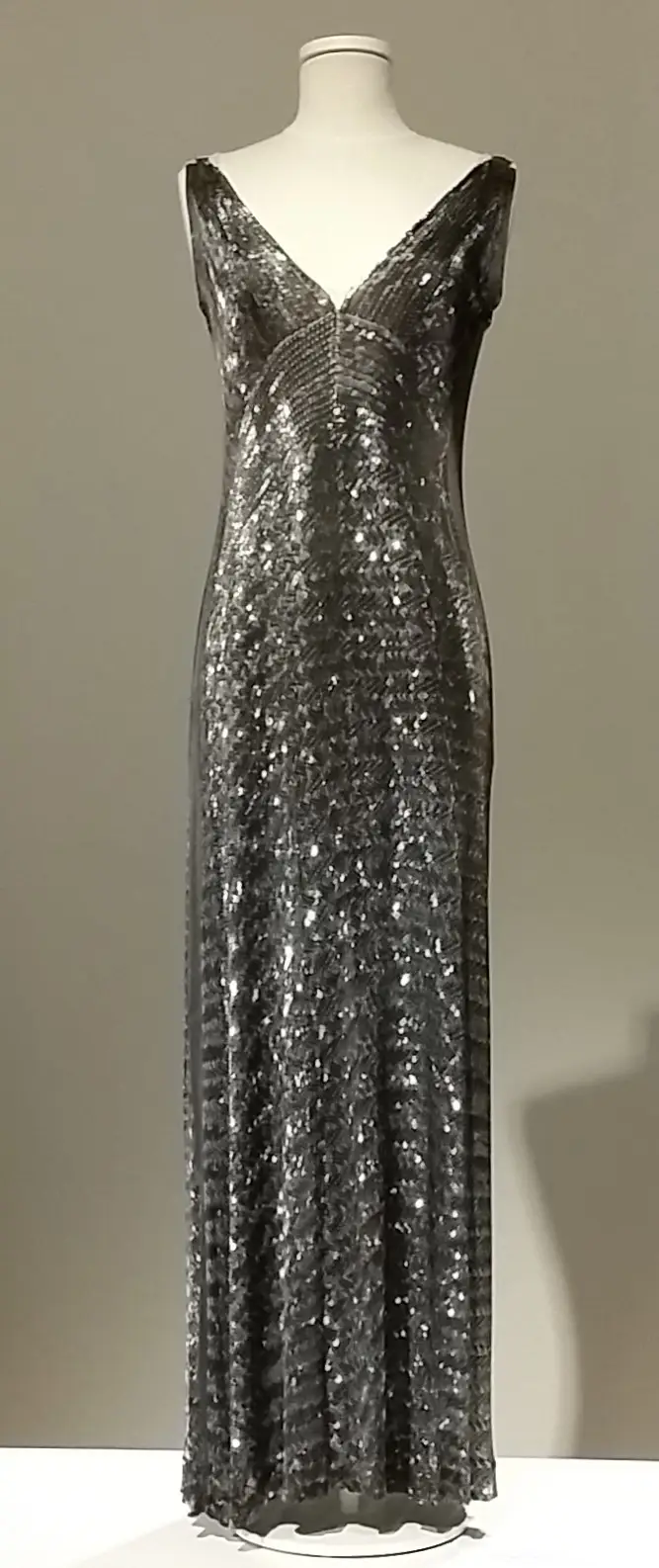
Martin Margiela showed his Spring/Summer 1993 collection simultaneously at opposite ends of Montmartre Cemetery in Paris, and the logistics of this decision constituted the collection’s most radical gesture: guests could only attend one end. No single viewer — not the most powerful editor, not the most important buyer, not the most devoted follower of the house — could see the complete collection in one sitting. The garments were divided into two groups, black and white, and the two halves were presented concurrently, so that attendance at one required the forfeit of the other. Completeness was structurally impossible. The critic could only review half. The buyer could only assess half. The audience had to accept an inherently partial experience and understand that what they were seeing was not the collection but a fragment of it, and that the collection as a whole existed only as an abstraction, a totality that no single consciousness could apprehend.
This was not a gimmick. It was a systematic dismantling of the assumptions that governed fashion viewing, criticism, and consumption. The fashion show, as an institution, depends on the premise that the audience sees what the designer intends — that the presentation is complete, that the experience is shared, that the collection can be evaluated as a unified body of work. Margiela’s cemetery show refused every element of this premise. By making the complete collection literally unseeable, he challenged the authority of the critic, who could not claim to have seen the show; the buyer, who could not claim to have assessed the merchandise; and the audience, who had to contend with the knowledge that whatever they experienced was, by design, insufficient. The fashion system’s hierarchy of access — the front row, the invitation list, the post-show visits — was rendered meaningless when even the most privileged viewer could only see half.
The cemetery setting was, of course, deliberate. Montmartre Cemetery, with its nineteenth-century tombs and its atmosphere of dignified decay, provided a context that deepened every gesture: fashion as mortality, the death of conventional presentation, the burial of industry norms. Models wove among the graves, and at moments a brass band played, giving the procession a funereal quality that was simultaneously solemn and theatrical. The garments included reconstructed theater costumes and what critics described as minimalism paired with Victoriana — a combination that placed the collection between two different modes of looking backward, one spare and reductive, the other ornamental and nostalgic. The tension between these modes gave the clothing a temporal complexity that matched the spatial complexity of the presentation: garments that seemed to exist in multiple historical periods at once, that were neither new nor old but something more unsettling — preserved, like the cemetery’s occupants, in a state between presence and absence.
Kate Moss appeared in the show, her presence linking Margiela’s avant-garde world to the mainstream fashion culture from which he otherwise maintained a careful distance. She was just emerging as a defining figure of the 1990s — the anti-supermodel, the waifish counterpoint to the Amazonian glamour of the previous decade — and her participation in a Margiela show staged in a cemetery was itself a collision of sensibilities that generated meaning beyond what either figure could produce alone. Cecilia Chancellor also walked, and together the models moved through the funereal setting with a gravity that suggested they were not presenting clothes but performing a ritual whose significance exceeded the garments they carried.
The Spring/Summer 1993 collection occupies a specific position within Margiela’s career and within the broader history of deconstructionism. The Spring/Summer 1989 debut had established his aesthetic vocabulary — the deconstruction, the unconventional venues, the refusal of the designer’s public identity. The Fall/Winter 1995 Stockman collection would be his most radical investigation of the garment itself. But SS93 was the season in which Margiela most aggressively deconstructed the fashion show as a social ritual, turning the presentation from a transparent medium through which garments are displayed into an opaque structure whose own logic was as significant as the garments it contained. The show was the work, and the work was the demonstration that fashion’s most fundamental assumptions — that a collection exists to be seen, that seeing it confers understanding, that understanding it permits judgment — were not natural laws but conventions that could be suspended, examined, and found wanting. The cemetery was the perfect setting for this demonstration: a place where the living come to visit the dead, where presence and absence coexist, where completeness is always out of reach.