Martin Margiela
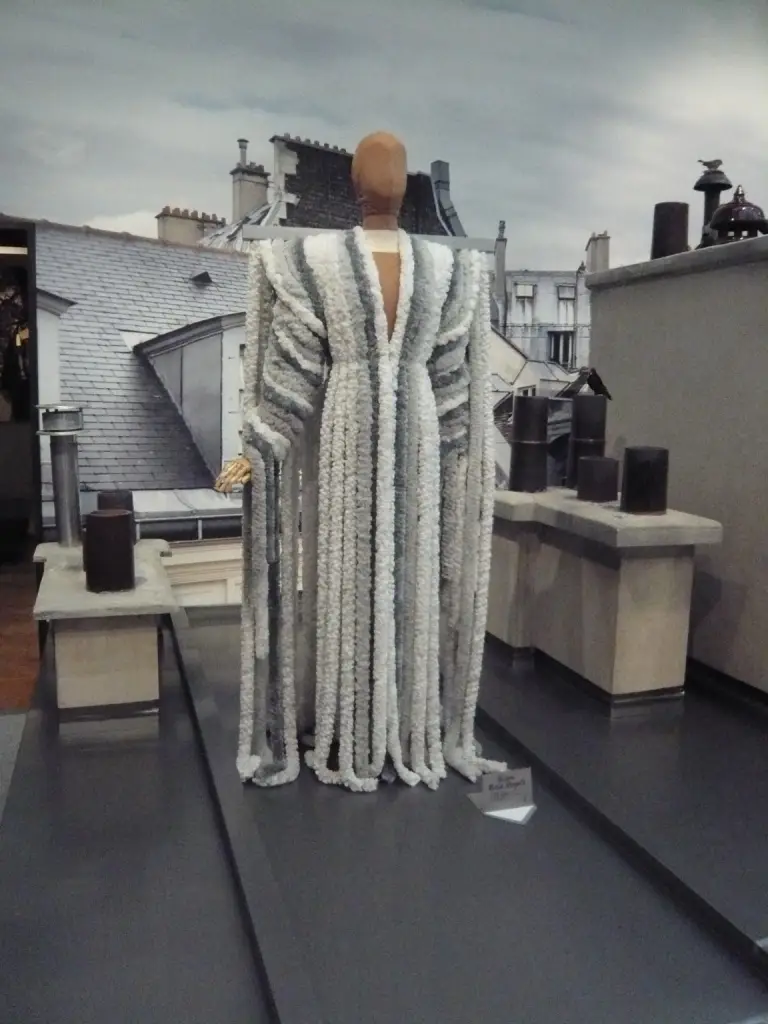
Martin Margiela graduated from Antwerp’s Royal Academy of Fine Arts in 1979 — one year before the class that would produce the Antwerp Six — and spent five years freelancing before moving to Paris, where he worked as Jean Paul Gaultier’s design assistant from 1984 to 1987. The apprenticeship with Gaultier taught him the mechanics of a fashion house, but it was what he rejected from those years that mattered most. Gaultier’s work was exuberant, populist, deliberately provocative in its embrace of the margins. Margiela absorbed the commitment to subversion but stripped it of spectacle. When he launched Maison Martin Margiela in 1988, co-founded with the formidable business partner Jenny Meirens, the house announced itself not through personality but through its systematic erasure. The invitation was a blank piece of fabric. The label was a blank white rectangle, attached by four white stitches at the back. The designer would never be photographed, never appear at a curtain call, never grant a face-to-face interview. Everything that the fashion industry assumed was essential — the cult of the creator, the narrative of genius, the spectacle of personality — Margiela refused.
His Spring/Summer 1989 debut, held at the Cafe de la Gare in the twentieth arrondissement of Paris while children watched from a nearby playground, remains one of the most consequential fashion shows ever staged. The models wore split-toe Tabi boots that left cloven hoofprints on the wet red paint covering the runway — an image that was simultaneously playful and deeply unsettling, as if the models were not quite human. The clothes were beautiful, but more importantly, they were arguments: against luxury’s preciousness, against fashion’s disposability, against the cult of the designer as celebrity. That year, Margiela won the first-ever ANDAM Award, France’s most prestigious prize for young designers, a validation that confirmed the industry recognized what he was doing even if it could not yet fully articulate what that was.
The anonymity was not a gimmick. Margiela communicated exclusively through faxed responses to interview questions, written in the collective first person plural — “we” — as if the house were an organism rather than the extension of a single sensibility. Staff wore white lab coats. The Paris headquarters, located in a former convent, was painted entirely white, every surface including the furniture, so that the passage of time would register as stains and marks on the pristine ground. This was deconstruction not merely as an aesthetic strategy but as an epistemology: every element of fashion’s infrastructure — the label, the studio, the designer’s public identity, the garment’s relationship to the body — was taken apart, examined, and reassembled with its mechanics exposed.
The garments themselves were the most rigorous expression of this philosophy. The numbered line system, eventually comprising twenty-three categories from zero to twenty-three, organized the house’s output not by traditional divisions like menswear or womenswear but by conceptual category. Line 0, the Artisanal line, was the laboratory: garments made from army socks, vintage gloves, broken plates, shopping bags, wig hair, discarded tailor’s mannequins. These were not exercises in poverty chic or naive recycling. They were investigations into what a garment is, where it begins, where it ends, and what happens when the raw materials of clothing are liberated from their expected forms. The Fall/Winter 1995 Stockman collection took the tailor’s dummy — the half-body form on which garments are constructed — as its starting point and produced flat, two-dimensional garments that challenged the fundamental relationship between cloth and body. Worn, they transformed the human form into something architectural and strange, neither mannequin nor person but something hovering between the two states.
From 1997 to 2003, Margiela served simultaneously as creative director of women’s ready-to-wear at Hermes, a position that seemed paradoxical for fashion’s great iconoclast but in practice revealed the depth of his technical ability. At Hermes, he produced twelve collections of extraordinary refinement — the roll-up jacket, removable-collar coats, the Cape Cod watch strap — demonstrating that his deconstructive intelligence could operate within the constraints of the most traditional luxury house in Paris. The work was understated, impeccably crafted, and entirely devoid of the conceptual pyrotechnics of the Maison. It proved that Margiela’s radicalism was not a deficit of skill but an excess of it: he could do anything, and what he chose to do at his own house was dismantle the very conventions he executed flawlessly at Hermes.
The later collections at the Maison pushed further into abstraction. Show locations became increasingly unconventional — abandoned metro stations, circus tents, an army surplus warehouse, the two ends of Montmartre Cemetery for the Spring/Summer 1993 collection, where guests stationed at opposite ends could only see half the show. Meirens managed the business with fierce independence, keeping the house solvent without the corporate backing that sustained most Parisian labels of comparable ambition. When Diesel’s parent company OTB acquired a majority stake in 2002, the relationship between creative vision and commercial reality shifted in ways that would gradually erode Margiela’s engagement. He stepped back informally in 2008 and departed formally in December 2009, without announcement, without farewell, without successor — just as he had entered, the absence itself a statement.
Margiela’s influence saturates contemporary fashion so thoroughly that it has become invisible, which is perhaps the most Margiela outcome imaginable. The oversized tailoring, the exposed construction, the conceptual approach to materials, the blank-label anonymity that Raf Simons, Demna Gvasalia, and dozens of others now practice daily — all of it runs through that playground in the twentieth arrondissement. John Galliano, appointed creative director in 2014, has pursued the deconstructive program with his own theatrical intensity, but the house’s DNA remains Margiela’s: the four white stitches, the conviction that a garment’s construction is as interesting as its surface, the insistence that fashion can be a form of philosophy conducted in cloth. He has since emerged as a visual artist, extending the investigations he began in fashion into new media, still anonymous, still refusing to explain. His silence, like everything else he ever did, is deliberate.