Ann Demeulemeester
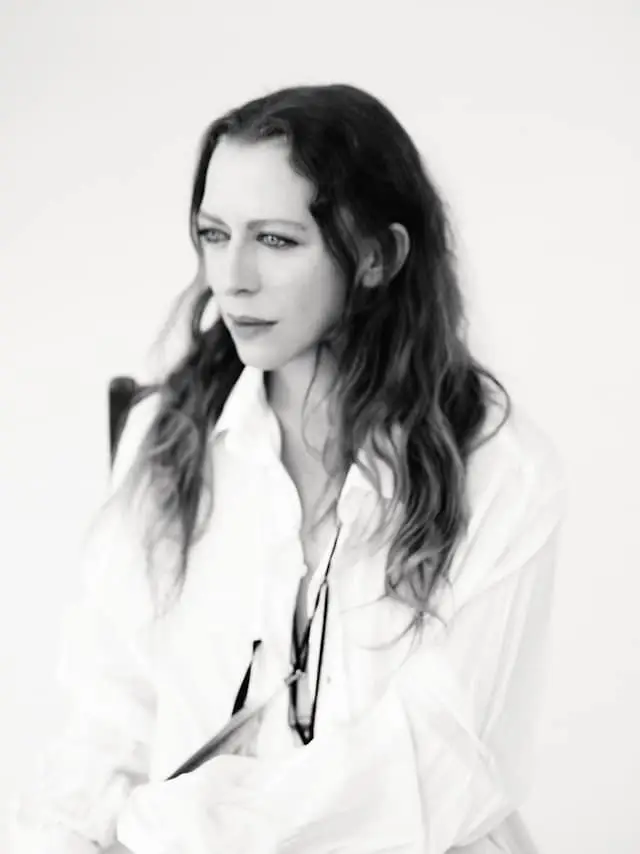
Ann Demeulemeester graduated from the Royal Academy of Fine Arts in Antwerp in 1981 and entered fashion’s consciousness in 1986 as a member of the Antwerp Six — the group of Royal Academy graduates who rented a truck, drove to London Fashion Week, and presented their collections with the conviction that Belgian design could matter on the international stage. The group included Dries Van Noten, Dirk Bikkembergs, Walter Van Beirendonck, Dirk Van Saene, and Marina Yee, and their collective debut permanently altered the geography of fashion, proving that influential design could emerge from outside the Paris-Milan-New York axis. But where her classmates pursued divergent paths — Van Noten toward refined eclecticism, Van Beirendonck toward playful provocation — Demeulemeester pursued a singular vision of gothic romanticism so consistent, so emotionally precise, that her entire career can be understood as a single, sustained meditation on the beauty of darkness and the darkness of beauty.
Her design vocabulary occupied a unique position within the Belgian avant-garde. Where Martin Margiela, whose early career overlapped with hers and for whom she occasionally worked as a freelance pattern maker, was conceptual and analytical, and where Rei Kawakubo was cerebral and abstract, Demeulemeester was lyrical. Her primary influences were not other designers but poets — Patti Smith foremost among them, whose fusion of punk aggression and Romantic sensibility provided a template for Demeulemeester’s own fusion of austerity and emotion. The Romantics, with their insistence that beauty and melancholy were inseparable, their conviction that feeling was a form of intelligence, informed every draped coat and asymmetric jacket she produced. Her work did not intellectualize emotion. It wore it.
The construction methodology was genuinely original. Demeulemeester began not with a sketch or a pattern but with flat cloth — a piece of fabric with arm holes, from which she developed forms through wrapping, draping, and the patient observation of how material fell across the body. This approach, closer to sculpture than to traditional pattern-making, produced silhouettes that were impossible to replicate through conventional methods: garments that appeared to have been discovered rather than designed, that looked as though they had always existed in the precise configuration in which they appeared on the body. The palette was dominated by black and white, occasionally interrupted by deep reds or ivories, and the fabrics — leather, silk, jersey, feathers — were chosen for their capacity to move, to drape, to respond to the body’s gestures with a sensitivity that stiffer materials could not achieve.
She presented her first collection under her own name in 1985 and debuted in Paris in 1991, a showing that marked a turning point for Belgian fashion on the international stage. In 1996, she became one of the first designers to present men’s and women’s collections together, anticipating by decades the co-ed show format that would become industry standard — a decision that reflected not a commercial calculation but her belief that her aesthetic vocabulary was not gendered, that the romantic darkness she pursued was as available to men as to women. The menswear was as strong as the womenswear: oversized coats, military boots, asymmetric construction, garments that made masculinity look less like armor and more like poetry.
Her collections unfolded across two decades with the consistency of a writer returning to the same themes with deepening insight. The silhouettes evolved but the emotional register remained constant: flowing, draped, darkly beautiful, infused with a tenderness that distinguished her work from the more cerebral projects of her Belgian contemporaries. A Demeulemeester garment wrapped the body like a confidence shared in private — close but not tight, protective but not restrictive, structured enough to move through the world but soft enough to acknowledge that the world is difficult. The leather jackets, which became her most commercially successful pieces, carried the same duality: tough on the surface, supple underneath, objects that gained beauty through wear and age rather than losing it.
She departed her own label in 2013, the departure marked by the same quiet conviction that had characterized her entire career. There was no dramatic exit, no public statement of creative frustration, no scorched-earth denunciation of the industry. She simply left, having said what she needed to say. A brief return to fashion in 2021 did not alter the essential shape of her legacy. Demeulemeester represents the poetic, emotionally expressive dimension of the avant-garde movement — the proof that conceptual rigor and emotional depth are not opposed but inseparable, that a garment can carry intellectual weight precisely because it carries feeling. In a movement dominated by designers who preferred to analyze rather than to feel, who dismantled rather than embraced, she insisted that darkness could be warm, that silence could be eloquent, and that the most radical thing a garment could do was make the person wearing it feel like themselves.