Alexander Wang
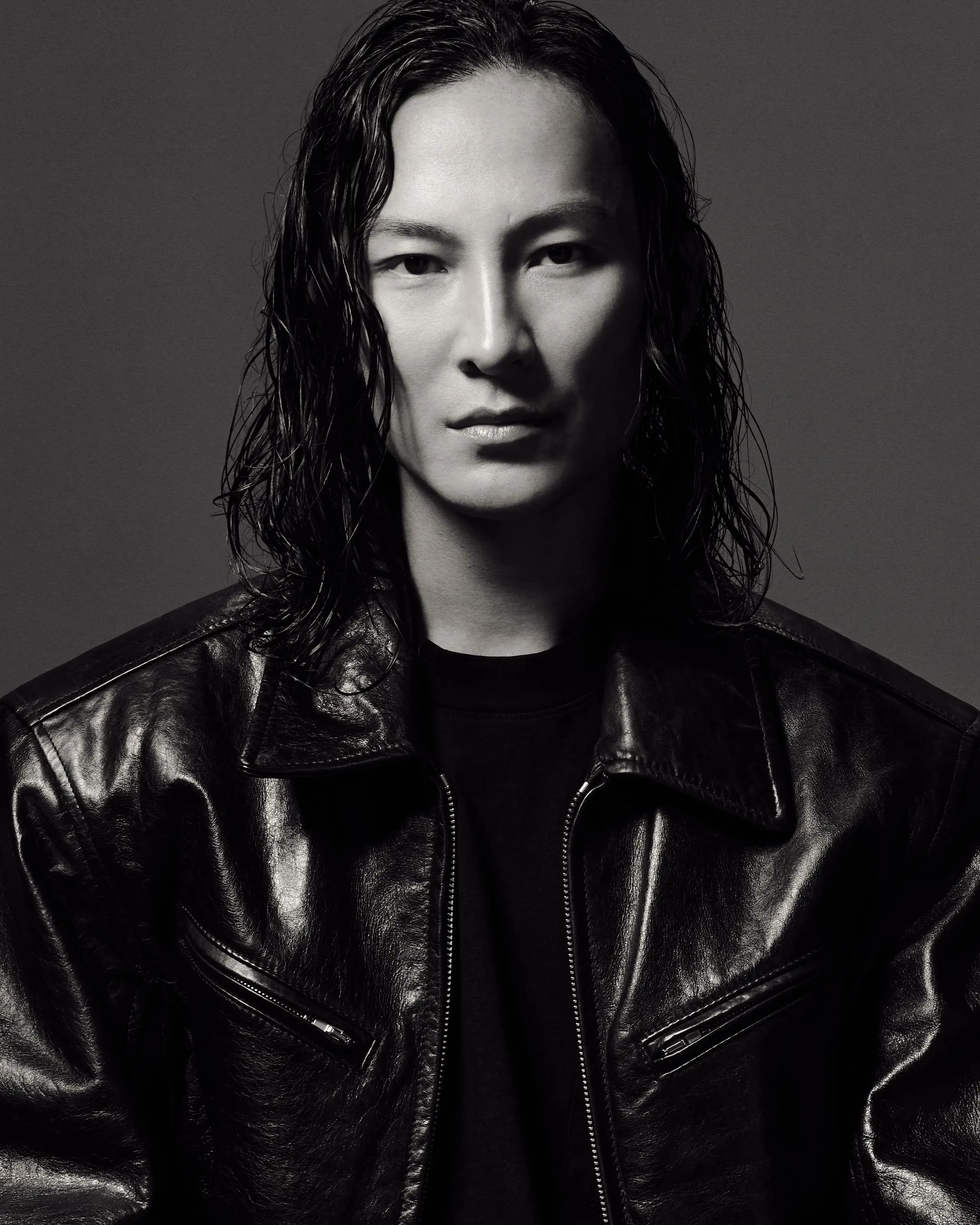
Alexander Wang was born on December 26, 1983, in San Francisco to parents who had immigrated from Taiwan. He moved to New York at eighteen to study fashion at Parsons School of Design, where he lasted two years before dropping out to launch his own label — a decision that became part of his mythology as a self-starter who trusted instinct over institutional credentials. In 2005, using his own savings, he produced a small debut collection of cashmere sweaters that caught immediate attention from buyers and editors. By 2007 he was showing full ready-to-wear runway collections at New York Fashion Week, and within two seasons he had established himself as the defining designer of a particular moment in American fashion: the era when looking like you had not tried was the most effortful thing you could do.
Wang’s early aesthetic crystallized around the model-off-duty look — the idea that the coolest clothes were the ones a supermodel would wear between shows, thrown on without apparent thought but carefully calibrated in their proportions and materials. Slouchy T-shirts in washed-out blacks. Oversized knits that slipped off one shoulder. Boyfriend-fit trousers. Draped leather jackets. The palette was relentlessly dark — black, charcoal, slate — and the silhouettes were deliberately undone, as though the garments had been slept in and were better for it. This was downtown New York translated into product: the energy of afterparties and early mornings and the particular brand of nonchalance that requires a specific zip code and a knowledge of which bars close last.
His relationship to Helmut Lang’s legacy was acknowledged and inescapable. Lang had defined 1990s New York minimalism — pared-down, urban, intellectual, effortlessly modern — and then abandoned fashion entirely in 2005, the same year Wang launched his label. Wang was frequently described as Lang’s spiritual successor, and the comparison was apt: both designers treated New York not as a backdrop but as a material, both operated in a register of austere cool that privileged reduction over decoration, and both understood that American luxury existed in the tension between high fashion and the street. Where they diverged was in Wang’s injection of sportswear and nightlife. He was one of the earliest designers to blur the boundary between athletic wear and high fashion, incorporating mesh, neoprene, sneaker references, and performance fabrics into runway collections years before the term athleisure entered the vocabulary.
The commercial infrastructure matched the creative ambition. T by Alexander Wang, the diffusion line focused on basics — T-shirts, jersey pieces, loungewear — became a gateway product that introduced the brand to an audience far broader than runway fashion typically reached. It was a strategy that anticipated the democratization of luxury: the idea that a sixty-dollar T-shirt from a designer known for thousand-dollar runway pieces could carry the same cultural charge. The two lines were eventually merged as the brand consolidated its offerings.
In December 2012, at twenty-eight, Wang was appointed creative director of Balenciaga, making him one of the youngest designers to helm a major European luxury house. The tenure was met with divided opinion. Wang brought youthful energy and commercial appeal to the house — sneaker-influenced footwear, logo-driven accessories, a general loosening of Balenciaga’s architectural austerity — but critics argued that his work lacked the structural rigor that Nicolas Ghesquiere had brought and that the house’s founder, Cristobal Balenciaga, had demanded. He departed in 2015 after three years, stating he wished to focus on his own brand. Demna Gvasalia succeeded him and took Balenciaga in a radically different direction.
The awards accumulated steadily: the CFDA/Vogue Fashion Fund in 2008, the CFDA Swarovski Award for Womenswear in 2009, CFDA Accessory Designer of the Year in 2011, and CFDA Menswear Designer of the Year in 2015. These accolades positioned him as one of the most decorated American designers of his generation, a status complicated by allegations of sexual misconduct that surfaced in late 2020 and 2021. Wang denied the allegations through legal representatives, but the controversy diminished his public profile, strained industry relationships, and marked a sharp inflection in a career that had been defined by momentum. He continues to operate his eponymous brand, shifting toward direct-to-consumer and digital-first strategies. The early work — the model-off-duty collections, the athletic-luxury fusion, the particular shade of downtown black — endures as a document of a specific moment in New York fashion when looking effortless required the most effort of all.