Belgian Wave
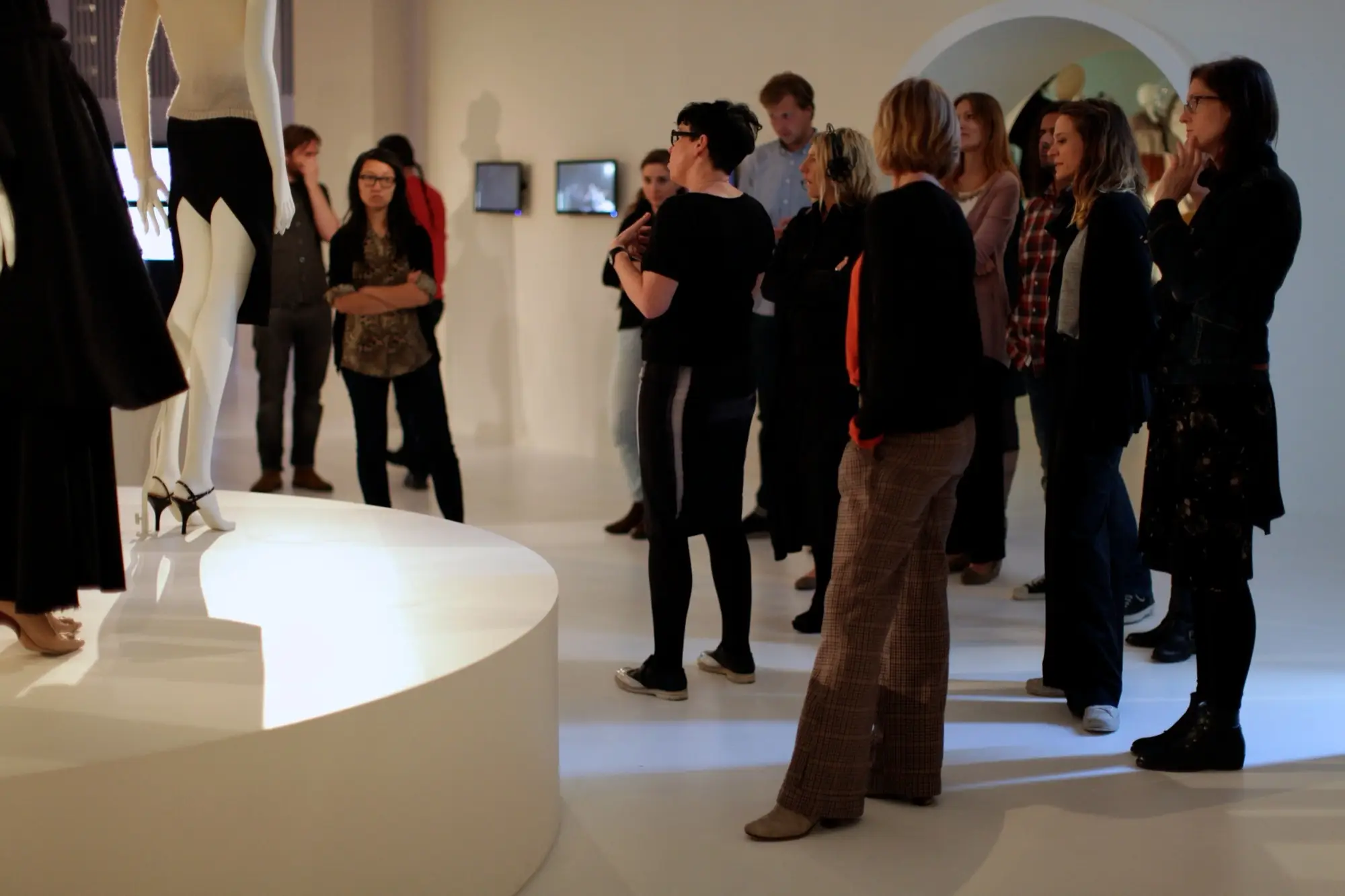
In 1986, six recent graduates of the Royal Academy of Fine Arts in Antwerp rented a truck, loaded it with garments, drove to London, and presented their collections at the British Designer Show during London Fashion Week. The English press, unable to pronounce their Flemish names, collectively dubbed them the Antwerp Six — Ann Demeulemeester, Dries Van Noten, Dirk Van Saene, Walter Van Beirendonck, Dirk Bikkembergs, and Marina Yee — and the label stuck, transforming what might have been a footnote in trade-show history into one of the defining narratives of late-twentieth-century fashion. Martin Margiela, who had graduated from the same academy in 1979, a year before the Six, was not part of the London trip but was so closely aligned in sensibility and ambition that he became the unofficial seventh, the plus-one whose presence completed the group’s significance. Together, they proved that world-class fashion innovation could emerge from outside the traditional capitals of Paris, Milan, New York, and London, and in doing so, they permanently redrew the geography of the industry.
The shared foundation was the Royal Academy itself, and specifically the fashion department shaped by instructors Linda Loppa and Mary Prijot, who cultivated in their students a commitment to conceptual depth, intellectual rigor, and the belief that fashion was a form of cultural production that demanded the same seriousness as architecture or fine art. The curriculum emphasized research, experimentation, and the development of a personal vision over commercial viability, and the designers who emerged from it carried this orientation into their professional lives with a conviction that the fashion establishment found alternately thrilling and incomprehensible. The turbulent social atmosphere of the 1980s — social unrest, unemployment, the HIV/AIDS crisis, the excesses of Thatcherism and Reaganomics — fueled their creative urgency and their desire for an alternative to the maximalist power dressing that dominated the decade. What they shared was not a single aesthetic but a disposition: the refusal to accept that fashion must be decorative, commercial, and culturally unambitious.
The individual trajectories that followed the London debut were divergent, and the Belgian Wave’s significance lies not in its unity but in its breadth. Demeulemeester pursued a gothic, romantic vision of dark beauty, her draped silhouettes and asymmetric constructions channeling the poetry of Patti Smith and the Romantics into garments that made darkness feel like tenderness. Van Noten built a practice of refined eclecticism, producing collections of extraordinary fabric selection and color mastery without ever employing a press agent or staging a conventional fashion show, demonstrating that commercial success and artistic independence could coexist. Van Beirendonck brought a playful, exuberant energy to the conceptual seriousness of the Belgian school, his collections engaging with popular culture, sexuality, and technology in ways that anticipated the ironic mode of the 2010s. Bikkembergs merged fashion with sportswear, anticipating the athletic luxury that would define the next century. Van Saene maintained the most determinedly independent practice, working at the margins of the industry by choice. Yee withdrew from fashion after a brief career but her presence in the original group was essential.
Margiela’s trajectory was the most consequential. His 1988 founding of Maison Martin Margiela, his Spring/Summer 1989 debut at the Cafe de la Gare with its Tabi boots and painted runway, his systematic deconstruction of every convention the fashion industry held sacred — these constituted the Belgian Wave’s most radical expression and its most enduring legacy. Where the Antwerp Six had demonstrated that Belgian design could compete on the international stage, Margiela demonstrated that it could rewrite the rules of the stage itself. His influence on the subsequent generations of Belgian designers — and on the broader culture of fashion — is incalculable.
Those subsequent generations extended the wave far beyond its original members. Raf Simons, who launched his menswear label in 1995 after an internship with Van Beirendonck and encouragement from Loppa, brought youth culture, post-punk music, and emotional rawness to a Belgian sensibility that had previously been more intellectual than visceral. Haider Ackermann pursued a sensuous, color-rich romanticism that expanded the Belgian palette beyond the blacks and whites that defined its first generation. Kris Van Assche brought Belgian rigor to Dior Homme. And Demna Gvasalia, though Georgian by birth, trained at the Royal Academy and absorbed the Belgian methodology of institutional critique before applying it to the luxury system through Vetements and Balenciaga, demonstrating that the Academy’s influence had become international, a methodology rather than a nationality.
The institutional legacy is equally significant. Antwerp, a small Flemish city with no significant fashion tradition before the 1980s, became a globally recognized fashion capital. The Royal Academy became one of the world’s most prestigious fashion schools, attracting students from every continent. The MoMu — the Fashion Museum in Antwerp, opened in 2002 — provided an archival and exhibition infrastructure for the movement’s history. The “EMERGENCE: The Antwerp 6+1” exhibition documented the moment that had started it all. The Belgian Wave’s deepest achievement was not any single garment or collection but the demonstration that fashion’s center is wherever the most serious work is being done — that a rented truck, a few dozen garments, and the conviction that design matters is sufficient to change an industry. The English press gave them a name because it could not remember their names. The names, four decades later, need no introduction.