Japanese Avant-Garde
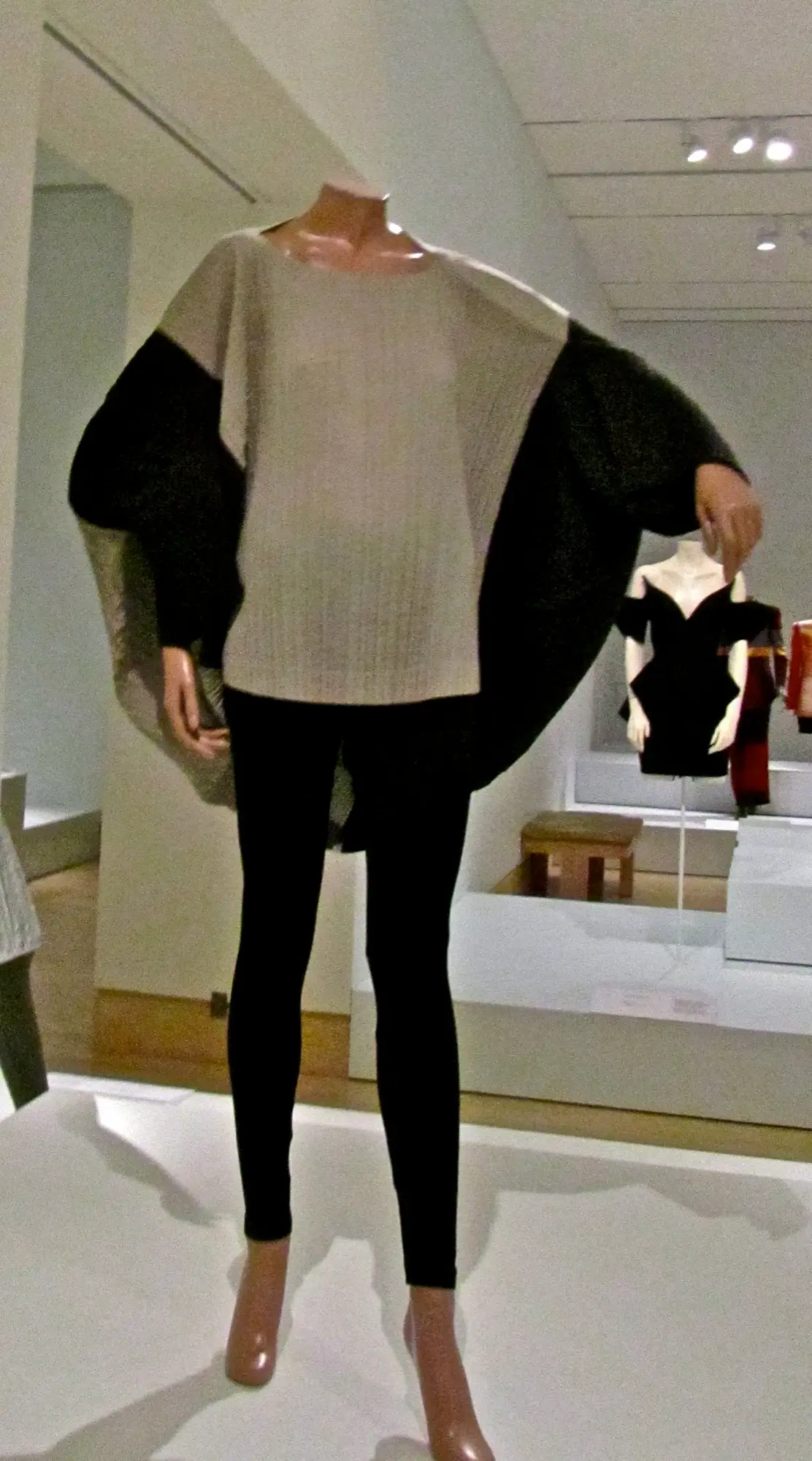
In 1981, Rei Kawakubo and Yohji Yamamoto presented their collections in Paris for the first time. The reaction was immediate and hostile. French critics, accustomed to the body-conscious glamour of the European houses, described the oversize, asymmetric, predominantly black garments as rags. The press coined derisive terms — “Hiroshima chic,” “post-atomic fashion,” and in one particularly crude formulation, “Fashion’s Pearl Harbor” — that revealed more about Western cultural anxieties than about the clothes themselves. The models, described by the Japanese press as “The Crows,” wore flat shoes, unstyled hair, and minimal makeup, their pale faces and dark silhouettes moving through the Parisian showrooms like emissaries from a fashion system that the Western establishment did not know existed and was not prepared to understand. What Kawakubo and Yamamoto had actually done was propose a fundamentally different understanding of the relationship between the body and the garment: rather than sculpting fabric to reveal or flatter the figure, they created autonomous forms that existed in conversation with the body, hovering around it, concealing and revealing according to a logic that had nothing to do with Western ideals of proportion or sex appeal.
The movement’s origins predated the 1981 shock by more than a decade. Japanese fashion’s engagement with the Western system had begun in the postwar period: Hanae Mori was the first Japanese designer to show in Paris, in 1965, and Kenzo Takada moved to Paris that same year, launching his label Jungle Jap in 1970 with designs that incorporated Japanese textiles and loose silhouettes into a framework that was still fundamentally Western in its logic of presentation and consumption. But it was Issey Miyake who first articulated the ambition that would define the movement. Returning to Japan from New York in 1970, Miyake established his design studio in Tokyo and began showing at Paris Fashion Week in 1973, pursuing what he described as a new fashion genre that was neither Japanese nor Western — a synthesis that would require rethinking garments from the surface down to their fundamental relationship with the body. His stated goal demanded a new approach to materials, to construction, to the very concept of what clothing was supposed to do, and his subsequent development of the Pleats Please line — polyester jersey garments constructed first, then sandwiched between paper layers and fed through a heat press — demonstrated that the technical innovation required to realize this vision could be as radical as the philosophical ambition that inspired it.
The philosophical roots of the Japanese avant-garde were distinct from European fashion’s preoccupations. Where Western design treated the body as a known quantity to be enhanced — the corset, the tailored jacket, the bias cut, all technologies for bringing the physical form closer to an ideal shape — the Japanese designers treated it as a variable. The concept of ma, meaning negative space or the interval between things, was not merely an aesthetic preference but a philosophical framework: the space between the garment and the body was not empty but meaningful, not a failure of fit but a site of beauty and freedom. Wabi-sabi, the appreciation of impermanence and imperfection, informed the treatment of materials — the deliberate holes in Kawakubo’s early garments, the distressed cottons in Yamamoto’s Spring/Summer 1983 collection, the fabrics that appeared to have been worn and aged before they were sold. These were not references to Japanese tradition in the decorative sense that Western fashion often employs such references, where a kimono sleeve or an obi belt appears as a “Japanese” gesture. They were applications of Japanese philosophical principles to the fundamental problem of how to cover a body.
Kawakubo’s trajectory after the 1981 debut deepened the movement’s investigation with each successive season. By 1980, Comme des Garcons had grown to approximately one hundred and fifty franchised shops in Japan, eighty employees, and thirty million dollars in annual revenue — a commercial empire that gave Kawakubo the financial stability to pursue conceptual ambitions that would have bankrupted a less established house. The Spring/Summer 1997 “Body Meets Dress, Dress Meets Body” collection took the movement’s central inquiry to its most radical conclusion, padding garments with goose-down to distort the body’s silhouette entirely, creating forms that bore no relationship to human anatomy and asking what beauty means when the body itself becomes unrecognizable. Yamamoto’s approach was gentler but no less subversive: his draped, oversized garments in black created a space of privacy and self-possession that rejected fashion’s demand that the wearer be available for visual consumption. His Spring/Summer 1983 collection — voluminous dark coats, huge brimmed hats hiding models’ faces, deliberately ripped cottons cut into ample gathered forms — remains one of the most significant presentations in the history of Paris fashion, a show that was met with accusations of poverty chic and post-atomic aesthetics but that was in fact proposing a beauty so different from the European standard that the existing critical vocabulary simply could not accommodate it.
The movement’s second generation extended the inquiry in new directions. Junya Watanabe launched his own line under the Comme des Garcons umbrella in 1992, bringing a technical virtuosity to the Japanese avant-garde that emphasized material innovation — his work with synthetic fabrics, with bonding and lamination technologies, demonstrated that the movement’s philosophical commitments could be pursued through engineering as rigorously as through draping. Chitose Abe founded Sacai in 1999, developing a hybrid aesthetic that fused disparate garments into single pieces, a practice that owed as much to the deconstructive tradition as to the Japanese concept of ma. Jun Takahashi’s Undercover brought punk’s destructive energy into conversation with the movement’s intellectual refinement. The Kyoto Costume Institute, established in 1978 under the Wacoal Corporation, became a major archive and research center for the movement under the direction of scholar Akiko Fukai, and the Barbican Art Gallery’s 2010 exhibition “Future Beauty: 30 Years of Japanese Fashion” — the first major European overview of the movement, curated in collaboration with the Kyoto Costume Institute — provided an institutional framework for understanding the movement’s historical significance.
The Metropolitan Museum of Art’s 2017 Costume Institute exhibition “Rei Kawakubo/Comme des Garcons: Art of the In-Between” — featuring approximately one hundred and forty works spanning from 1981 to the present, making Kawakubo only the second living designer after Yves Saint Laurent to receive a solo Met exhibition — confirmed the movement’s canonical status. Harold Koda’s Met essay on Miyake, Kawakubo, and Yamamoto remains a key scholarly text, situating the trio’s impact within the broader history of twentieth-century fashion. The movement’s legacy is structural rather than merely aesthetic. It proved that fashion innovation could originate outside of Europe, challenged the primacy of body-revealing silhouettes, treated black as a philosophical choice rather than a sign of mourning, and established fashion as a form of intellectual expression that could carry the same weight as architecture, literature, or visual art. Martin Margiela, Ann Demeulemeester, and the Belgian designers directly cite the Japanese avant-garde as a foundational influence. Rick Owens, Demna Gvasalia, and Craig Green have acknowledged the same debt. The oversized silhouettes, the non-body-conscious construction, the treatment of gender as fluid rather than binary — decades before “genderless fashion” became a recognized movement — all originate in the work that Kawakubo, Yamamoto, and Miyake produced in the decades following that first, hostile reception in Paris. The critics eventually caught up. The designers never needed them to.