Rei Kawakubo
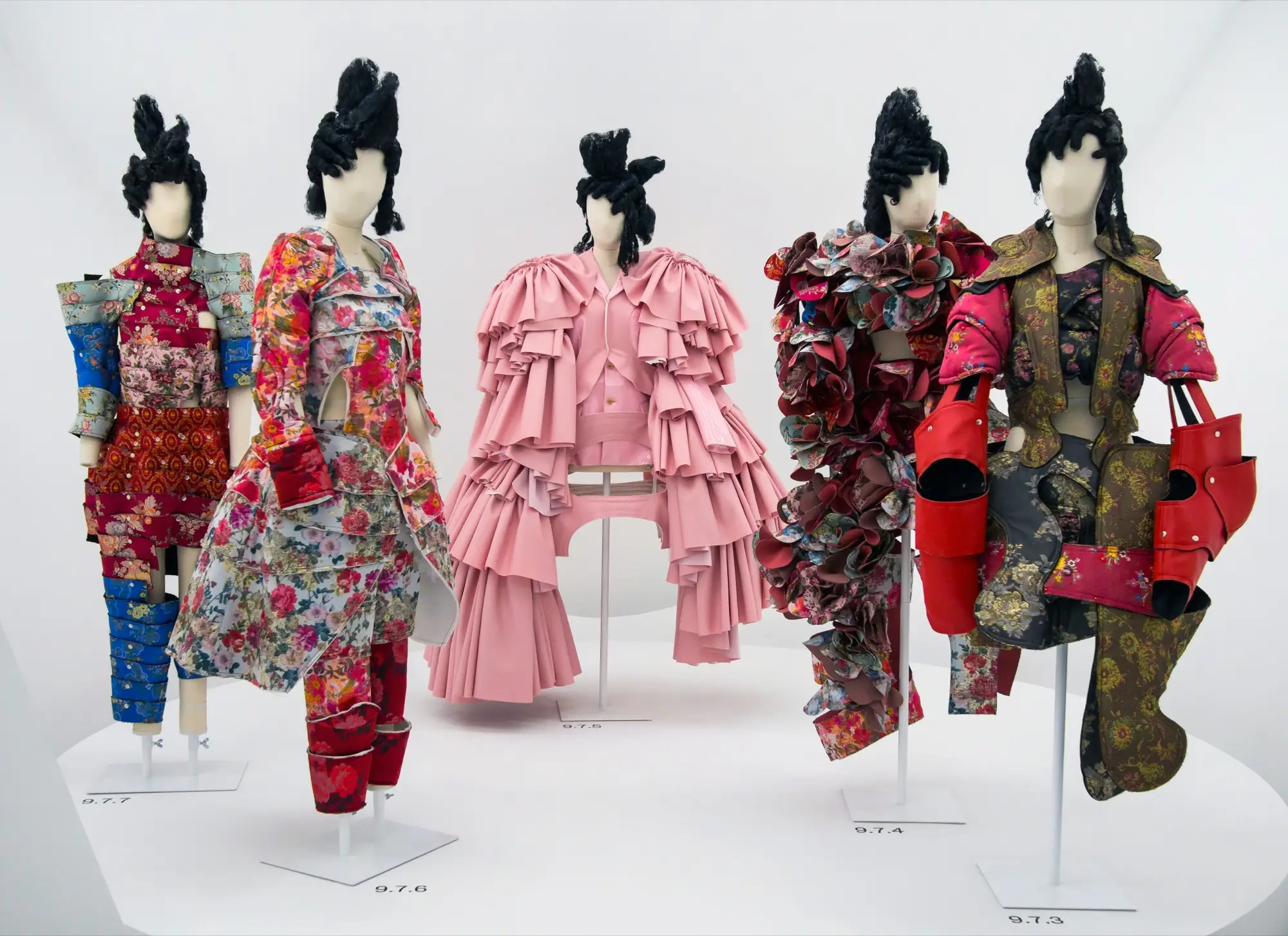
Rei Kawakubo has never explained herself and has no intention of starting. She studied art and literature at Keio University in Tokyo, graduating in 1964 with no formal fashion education and, by all evidence, no interest in acquiring one. She worked briefly in the advertising department of the textile company Asahi Kasei before leaving in 1967 to work as a freelance stylist, and in 1969 she founded Comme des Garcons — “Like the Boys” — a name that announced its defiance before a single garment had been cut. The company was incorporated in 1973. By 1975, she had opened her first boutique in Tokyo. By 1980, Comme des Garcons had grown to approximately one hundred and fifty franchised shops across Japan, eighty employees, and thirty million dollars in annual revenue. None of this penetrated the consciousness of the Western fashion establishment, which in 1980 was still operating under the assumption that fashion happened in Paris, Milan, and New York, and that everything else was provincial.
Her 1981 Paris debut — alongside Yohji Yamamoto, with whom she shared both a moment and a sensibility but not a methodology — was greeted with the kind of hostility reserved for genuine ruptures. Critics called the clothes “post-atomic” and “Hiroshima chic,” characterizations that were racist in their casual conflation of Japanese identity with nuclear destruction and wrong in their reading of Kawakubo’s intentions. She was not referencing destruction but proposing an alternative aesthetic vocabulary. The asymmetric silhouettes, the monochromatic palette dominated by black and dark grey, the deliberate holes and unfinished hems were not nihilism. They were freedom — from the body-revealing imperative of Western fashion, from the tyranny of the fitted silhouette, from the assumption that a garment’s purpose is to make the wearer attractive according to existing standards. The Japanese press nicknamed Kawakubo and her followers “The Crows,” a label that captured the visual impact of her early audiences but missed the radicalism of what they were wearing.
What distinguishes Kawakubo from nearly every other designer working at the highest level is her refusal to repeat herself. Each Comme des Garcons collection begins, by her account, from a place of not knowing — a deliberate emptying of accumulated wisdom that would terrify any designer less committed to the principle that fashion must perpetually unsettle. The Spring/Summer 1997 “Body Meets Dress, Dress Meets Body” collection — the so-called Lumps and Bumps collection — distorted the silhouette with padded protrusions placed at the back, the hips, the shoulders, locations that bore no relationship to conventional ideas of enhancement or flattery. The garments appeared to have tumors or pregnancies or extra organs. It was grotesque and it was beautiful and it asked a question no one else in fashion was asking: what happens when the body itself becomes unfamiliar? The collection enraged some critics and electrified others, but what mattered was that Kawakubo, nearly three decades into her career, was still capable of genuine provocation — not the manufactured controversy of a designer seeking attention, but the authentic disruption of a mind that cannot stop interrogating its own premises.
The business empire she has built with her husband and partner Adrian Joffe is as philosophically coherent as the collections themselves. Comme des Garcons operates through a constellation of lines and sub-labels — Homme, Homme Plus, Shirt, Play, Noir Kei Ninomiya, and the lines designed by Junya Watanabe under the CDG umbrella — each occupying a distinct conceptual position. The Dover Street Market retail concept, co-founded with Joffe in 2004 and now operating in London, New York, Tokyo, Singapore, Beijing, Los Angeles, and Paris, rethinks the department store as a curated environment where fashion, art, and design coexist without hierarchy. It is the physical manifestation of Kawakubo’s belief that commerce need not compromise vision, that a store can function as an exhibition space, that the act of selling can be as thoughtful as the act of creating.
In 2017, the Metropolitan Museum of Art’s Costume Institute mounted “Rei Kawakubo/Comme des Garcons: Art of the In-Between,” featuring approximately one hundred and twenty to one hundred and fifty womenswear designs spanning from 1981 to the present. It made her only the second living designer — after Yves Saint Laurent in 1983 — to receive a solo Costume Institute exhibition. Andrew Bolton, the exhibition’s curator, described her as one of the most important designers of the past forty years. She reportedly disliked the framing, which is entirely characteristic. The following year she received the Isamu Noguchi Award, becoming the first fashion designer to receive a prize traditionally reserved for artists, architects, and industrial designers — a recognition that confirmed what Kawakubo had been demonstrating since 1969: that the categories themselves are inadequate.
Her influence is structural, not stylistic, and this is the distinction that matters. Martin Margiela’s deconstruction, Junya Watanabe’s technicality, Raf Simons’s early conceptualism, Demna Gvasalia’s institutional critique — all of these carry Kawakubo’s DNA, not because these designers imitate her aesthetic but because she demonstrated that fashion could be a medium for ideas rather than merely a medium for beauty. The earlier CFDA Womenswear Designer of the Year award in 1996 and the Lifetime Achievement Award in 2012 ratified an influence that needed no ratification. At eighty, she continues to show in Paris, and the collections continue to confound — to frustrate those who want fashion to be legible and to inspire those who understand that its highest function is to remain perpetually beyond comprehension. She would not want it any other way.