Craig Green
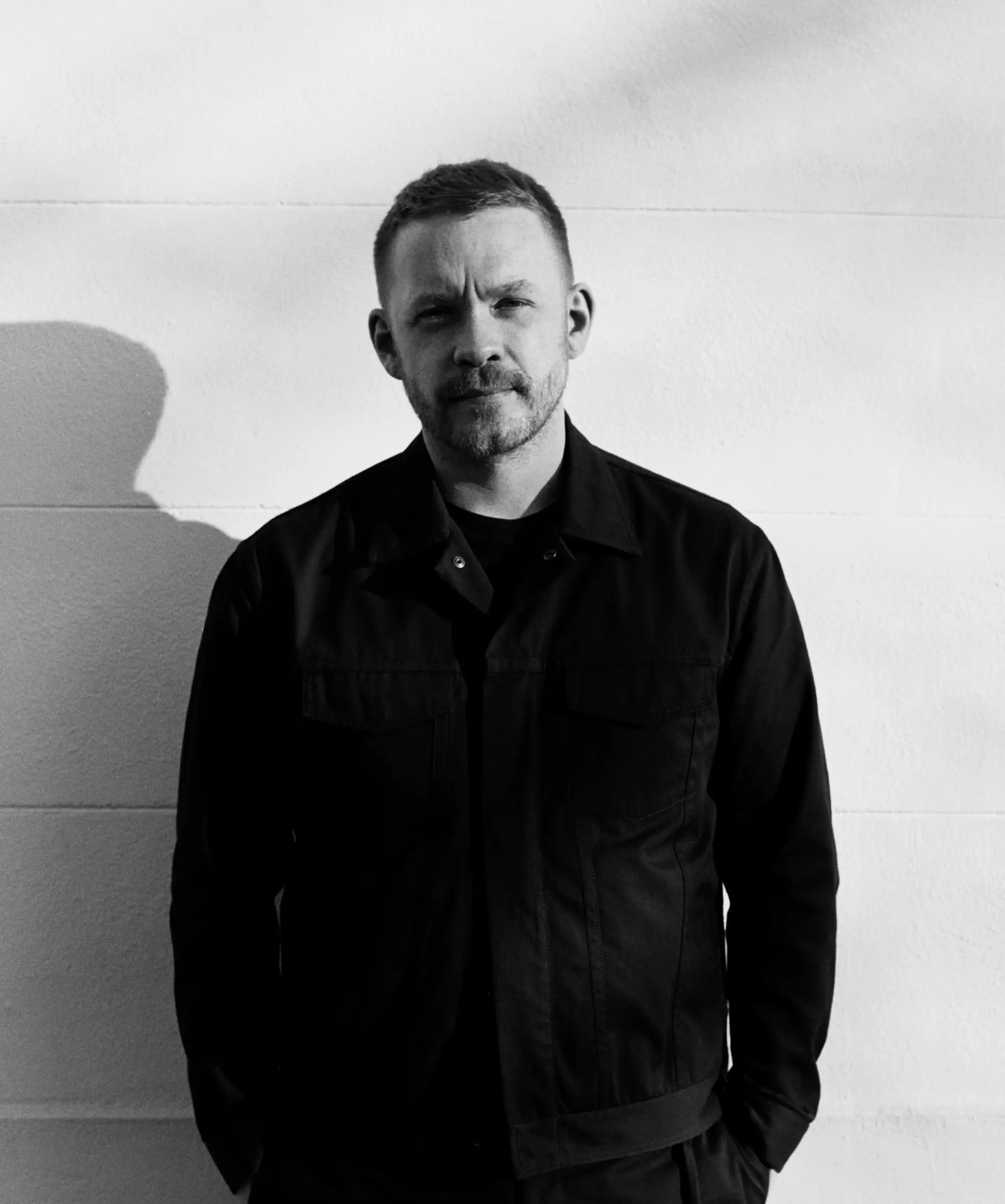
Craig Green was born in 1986 in Hendon, North London, into a family that had no connection to the art world but made things constantly. His father was a plumber. His mother was a nurse who spent her spare time on arts and crafts as a Brownies leader. His uncles were carpenters and bricklayers. His godfather was a furniture upholsterer who taught him to sew as a teenager. The trades that surrounded him — their emphasis on material, function, and the dignity of manual labor — would become the foundation of everything he designed. He started at university studying ceramics and printmaking, but after noticing that the most interesting people around him were studying fashion, he pivoted to the print pathway of the fashion design BA at Central Saint Martins.
His MA collection, completed in 2012 under the mentorship of Louise Wilson, drew on The Wicker Man and Village of the Damned — horror films about communities whose rituals have become incomprehensible to outsiders. The collection won the L’Oreal Professionnel Creative Award for the strongest work at the CSM graduation show. At the time, Alexander McQueen was the dominant influence on every student in the department, and the prevailing aesthetic was dangerous femininity with illustrative prints. Green felt like a creative outsider. He was looking at Rei Kawakubo, Walter Van Beirendonck, and Bernhard Willhelm instead, designers who proved that fashion could come from anywhere and be about anything. That realization was liberating.
He launched his label immediately upon graduating and made his runway debut at London Collections: Men in 2013, as part of the MAN initiative supported by Fashion East and Topman. The signature emerged almost immediately: boxy worker jackets rendered in inch-wide quilted shell fabric, inspired by fencing gear, martial arts padding, spacesuits, and medieval gambesons. The quilted panel became his recurring motif in the way that Miyake’s pleats became his — a structural principle rather than a decorative detail. Lacing and tie-up straps, dangling to the floor, gave each garment a modular quality. They could be reconfigured. They could be taken apart. They looked like protective equipment designed for a world where the body needed armor but also beauty.
What distinguished Green from other conceptual menswear designers was the accessibility of his emotion. The work was sculptural and sometimes extreme — models draped in meticulously affixed panels, their faces obscured, their bodies transformed into geometric volumes — but it never felt hostile or alienating. The shapes derived from protection and shelter: life jackets, life rafts, isolation tanks, the kind of gear designed to keep a human being alive. There was tenderness in it. The quilted worker jacket, his bestselling garment, functioned equally well on a runway and on a street. This was the reconciliation that had eluded most of British avant-garde menswear: conceptual ambition and commercial viability in the same garment.
The industry recognized it quickly. He won the Emerging Menswear Designer award at the British Fashion Awards in 2014, was a LVMH Prize finalist in 2015, and won the BFC/GQ Designer Menswear Fund in 2016 — the UK’s largest menswear prize, worth one hundred fifty thousand pounds plus business mentoring. Then he won British Menswear Designer of the Year three consecutive times, in 2016, 2017, and 2018. The collaborations that followed demonstrated range without dilution: Moncler Genius (sculptural outerwear with exaggerated proportions), adidas Originals (reworked silhouettes from the Stan Smith to the Ozweego), and Eastpak (quilted detailing applied to everyday bags). Each partnership translated his vocabulary for a broader audience without simplifying it.
In 2022, Green received an MBE for services to fashion. In October 2023 he was appointed Professor of Fashion Design at the University of Applied Arts Vienna, joining a lineage of educators that includes Karl Lagerfeld, Vivienne Westwood, Helmut Lang, and Raf Simons. He continues to show his eponymous collection in Paris while teaching in Vienna. The work remains rooted in the same impulse that drove it from the start: the belief that the trades and materials of working-class life — the tools of his father’s and uncles’ professions — contain as much beauty and conceptual possibility as anything the fashion establishment has ever produced.