Streetwear-to-Runway
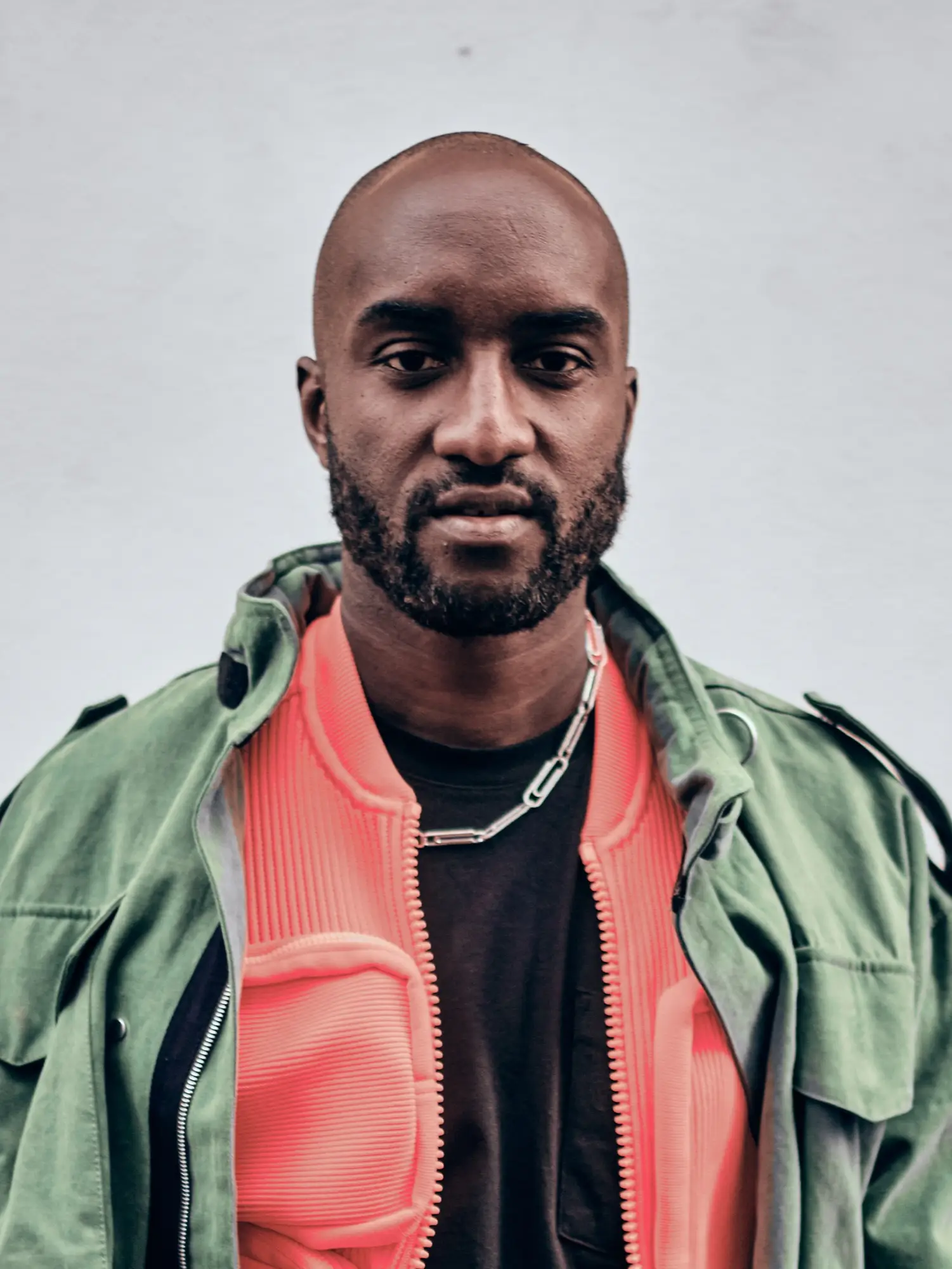
The most significant disruption of fashion’s traditional hierarchy since the Japanese avant-garde shocked Paris in 1981 did not come from a design school or a couture atelier. It came from skate shops, from hip-hop, from the internet, and from a generation of designers who understood that the distinction between streetwear and high fashion — between the hoodie and the couture gown, between the limited-edition sneaker and the runway shoe — was not a natural law but a social convention maintained by gatekeepers whose authority was eroding in real time. The streetwear-to-runway movement of the 2010s challenged not merely the aesthetic norms of fashion but the entire structure of who gets to make luxury clothing, who gets to consume it, and what constitutes value in a system whose definitions of quality, rarity, and desirability were being rewritten by forces outside its control.
The roots extended deep into the preceding decades. Hip-hop’s adoption of luxury brands in the 1980s and 1990s — the Gucci, the Louis Vuitton, the Versace worn as status symbols in communities that the brands themselves did not acknowledge as customers — had already exposed the tension between fashion’s aspirational self-image and the reality of who was actually buying and wearing its products. Skate culture, with its emphasis on authenticity, community, and the DIY customization of garments and equipment, had developed a parallel system of production and consumption that operated entirely outside fashion’s institutional frameworks. James Jebbia’s Supreme, founded in New York in 1994, synthesized these currents into a brand that would become the movement’s most visible institution — a skate shop whose limited-edition product releases, or “drops,” generated queues, resale markets, and a model of scarcity-driven demand that the luxury industry would eventually adopt wholesale.
The movement’s symbolic apotheosis arrived in 2017 when Louis Vuitton collaborated with Supreme, placing the logo of luxury’s established elite alongside the box logo of an underground skate brand. The partnership was both a commercial triumph and a conceptual earthquake: it acknowledged that streetwear’s cultural authority had become so powerful that even the most conservative luxury house could not afford to ignore it. That same year, The Carlyle Group’s purchase of a fifty-percent stake in Supreme, valuing the company at one billion dollars, proved that branded T-shirts and hoodies constituted serious business — that the hoodie, the most derided garment in fashion’s traditional hierarchy, could generate the same financial returns as the most elaborate couture.
Virgil Abloh was the movement’s central figure, and his trajectory from creative consultant and DJ to the artistic director of Louis Vuitton’s menswear line — a position he assumed on March 25, 2018, becoming the first person of African descent to lead the brand’s menswear — mapped the movement’s own ascent from margin to center. After founding Pyrex Vision in 2012 and transforming it into Off-White in 2013, Abloh developed a design practice that operated explicitly at the boundary between streetwear and high fashion, his trademark quotation marks — printed on Nike midsoles, on shoelaces, on the garments themselves — functioning as ironic commentary on fashion’s conventions, a set of scare quotes around the very concept of luxury. The collaboration with Nike on “The Ten” — a series of deconstructed sneakers whose exposed foam, visible stitching, and handwritten annotations treated the athletic shoe as an object of conceptual design — became one of the most commercially successful and culturally discussed collaborations in fashion history. Abloh’s death on November 28, 2021, at the age of forty-one, cut short a career whose full implications remain unresolved, but his legacy permanently altered fashion’s demographics and power structures.
Demna Gvasalia’s contributions operated in a complementary register. Vetements, co-founded in 2014, used ironic elevation of mundane objects — the DHL delivery shirt, the oversized hoodie, the Champion sweatshirt — to critique luxury fashion’s value propositions while operating at luxury price points, a strategy that was simultaneously sincere and satirical, a commentary on the arbitrary nature of fashion’s value hierarchy that was itself a product of that hierarchy. His appointment at Balenciaga extended this critique to the scale of a billion-dollar luxury house, demonstrating that the streetwear sensibility could reshape the aesthetics and economics of fashion at the highest level. The Triple S sneaker, with its deliberately ugly, oversized silhouette, became the defining footwear object of the late 2010s — a sneaker that functioned as meme, luxury good, and institutional critique simultaneously.
Rick Owens’s position within the movement is distinctive. His engagement with sneaker culture through the Geobasket and subsequent adidas collaborations predated the mainstream streetwear-luxury convergence by nearly a decade, and his approach — treating the sneaker as an object of architectural investigation rather than a cultural signifier to be ironically appropriated — offered a more substantive model of integration than the logo-driven collaborations that characterized the movement’s commercial peak. Owens demonstrated that streetwear and runway fashion could be synthesized not through branding but through genuine design intelligence, through the application of the same conceptual rigor to a sneaker that one might apply to a couture garment.
The movement transformed fashion’s business model as fundamentally as it transformed its aesthetics. The “drop” replaced the seasonal collection as the primary unit of commercial release. The collaboration replaced the in-house design team as the primary engine of cultural relevance. Social media replaced the fashion press as the primary channel of dissemination. And the consumer — young, diverse, digitally native, allergic to the exclusivity that had defined luxury for a century — replaced the traditional fashion client as the industry’s most important audience. Whether these transformations represent a democratization of fashion or merely a rebranding of its exclusions depends on where one stands, but the scale of the change is not in dispute. The hoodie sits on the runway now. The sneaker commands couture prices. The hierarchy that separated high and low, luxury and street, the runway and the sidewalk has not been abolished — hierarchies never are — but it has been reorganized, and the terms on which it operates will never again be the terms that governed it before.