Highland Rape
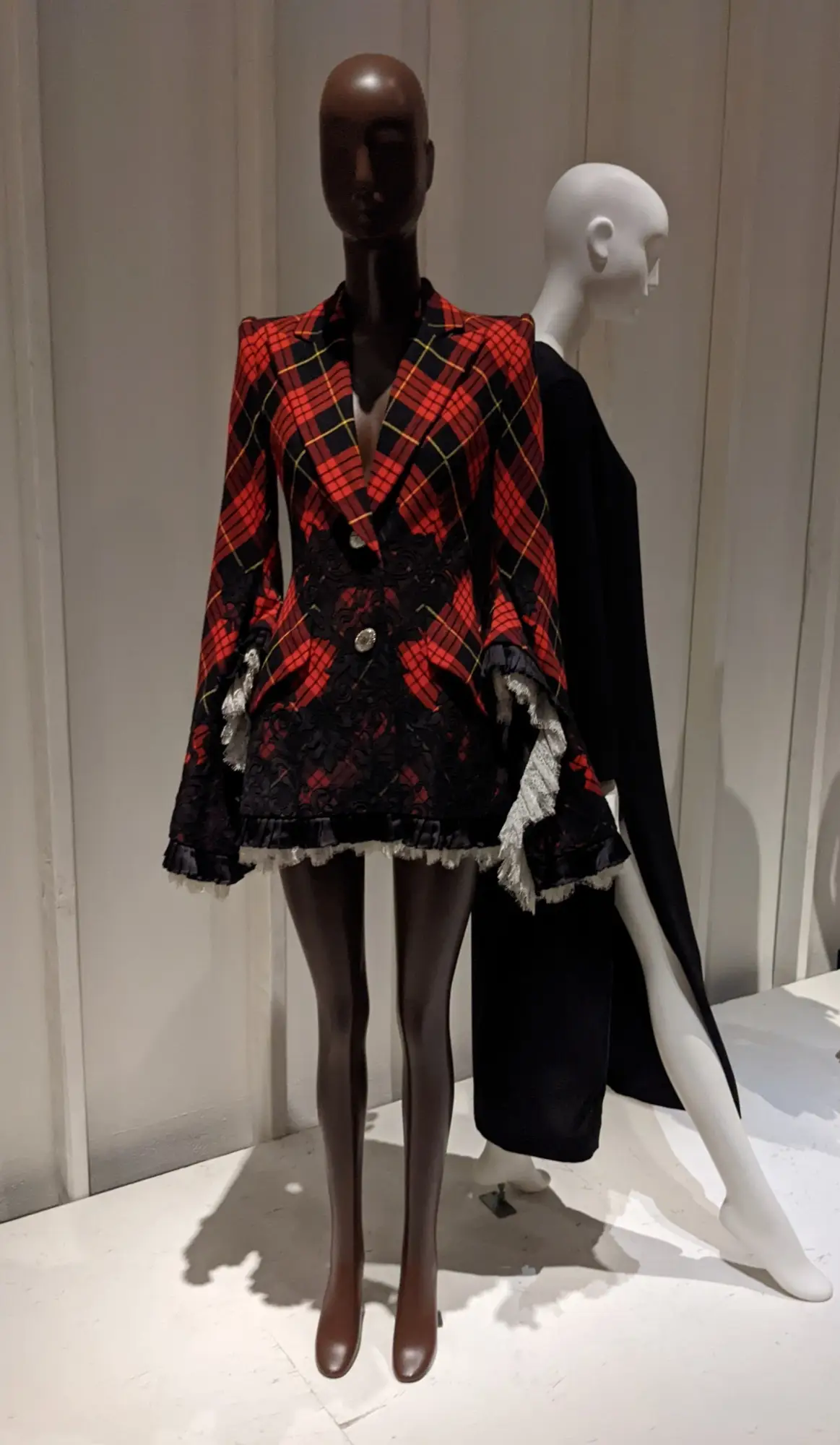
The runway was strewn with heather. Models staggered out in beautifully tailored ensembles and gossamer lace dresses that appeared torn and ripped as if from an attack — fabric shredded across the torso, skirts slashed to expose the leg, garments that looked as though they had been subjected to a violence that was both specific and historical. Some models imitated a military march with stiff, rigid arms; others moved with a slinky, predatory gait that made the audience uncertain whether they were witnessing the aftermath of an assault or the performance of a seduction. This was Alexander McQueen’s Fall/Winter 1995 collection, his sixth, shown at London Fashion Week on March 13, 1995, and it was the show that made his name — not through acclaim but through controversy, not through consensus but through the kind of furious disagreement that only genuinely important work can generate.
The title — “Highland Rape” — referred to the Highland Clearances and the Jacobite risings, the systematic displacement and cultural destruction of Scottish communities by the English over several centuries. McQueen’s own heritage was Scottish, and the collection was, in his account, a narrative about colonialism enacted through the medium of clothing: the rape of Scotland by England, the destruction of a culture, the violence embedded in the history of the British Isles. Scottish tartan appeared throughout the collection — not as the decorative tartanry of tourist shops and royal estates but as the fabric of a displaced people, slashed and distorted, its patterns disrupted in the same way that the Clearances had disrupted the communities that produced them. The tailoring was virtuosic, McQueen’s Savile Row training evident in every precisely cut shoulder and every jacket that followed the body with an intimacy that only a pattern cutter of extraordinary skill could achieve. The “bumster” trousers — designed to elongate the torso by lowering the waistline to the base of the spine, a McQueen innovation that would influence a decade of fashion — appeared alongside the more dramatic pieces, their provocation quieter but no less deliberate.
The British tabloid press read the collection as a celebration of violence against women. The torn garments, the disheveled models, the word “rape” in the title — all of it was interpreted through the lens of misogyny, and the twenty-six-year-old McQueen was denounced as a designer who glamorized sexual assault. The accusation was reductive and in many respects wrong — the collection’s referent was national and colonial, not personal and sexual — but it was not entirely baseless, because the power of the images depended in part on their evocation of gendered vulnerability. McQueen knew this. He had drawn not only from the Highland Clearances but from witnessing the domestic abuse his sister endured, and the collection’s emotional force derived from the collision of these two registers of violence: the historical and the intimate, the political and the personal, the rape of a nation and the violation of a body. That the fashion industry’s critical apparatus could not hold both readings simultaneously was, for McQueen, evidence of its limitations rather than his.
The collection was very poorly received critically at the time, which is perhaps the most reliable indicator of its significance. The work that generates the most violent disagreement is often the work that matters most, because genuine disruption is never comfortable and never immediately legible. What McQueen had demonstrated — that a fashion show could function as a site of historical narrative, that garments could carry the weight of colonial history and gendered violence without collapsing into mere illustration, that a twenty-six-year-old with a pattern-cutting background and a combative disposition could produce work of genuine political and emotional complexity — would take years to be fully understood. The Metropolitan Museum of Art’s 2011 “Savage Beauty” retrospective placed “Highland Rape” within the context of a career that consistently used fashion as a vehicle for stories about power, identity, and the body’s vulnerability, and from that retrospective distance, the collection’s ambition became unmistakable.
The heather on the runway, the torn lace, the military gait of the models, the precision of the tailoring beneath the violence of the presentation — every element was simultaneously beautiful and disturbing, and the refusal to separate beauty from disturbance was McQueen’s most characteristic gesture. He did not believe that fashion existed to make people feel safe. He believed it existed to make people feel something, and if what they felt was discomfort, confusion, or outrage, then the garments had done their work. “Highland Rape” was the collection in which this conviction first achieved full expression, and everything that followed — the holographic projections, the chess matches, the spray-painting robots, the entire theatrical apparatus of a career cut short at forty — was an elaboration of the questions first posed on that heather-strewn runway: what can fashion say about history, about violence, about the body’s capacity to bear meaning it did not choose? The answers McQueen proposed were never reassuring, but they were always, technically and conceptually, masterful.